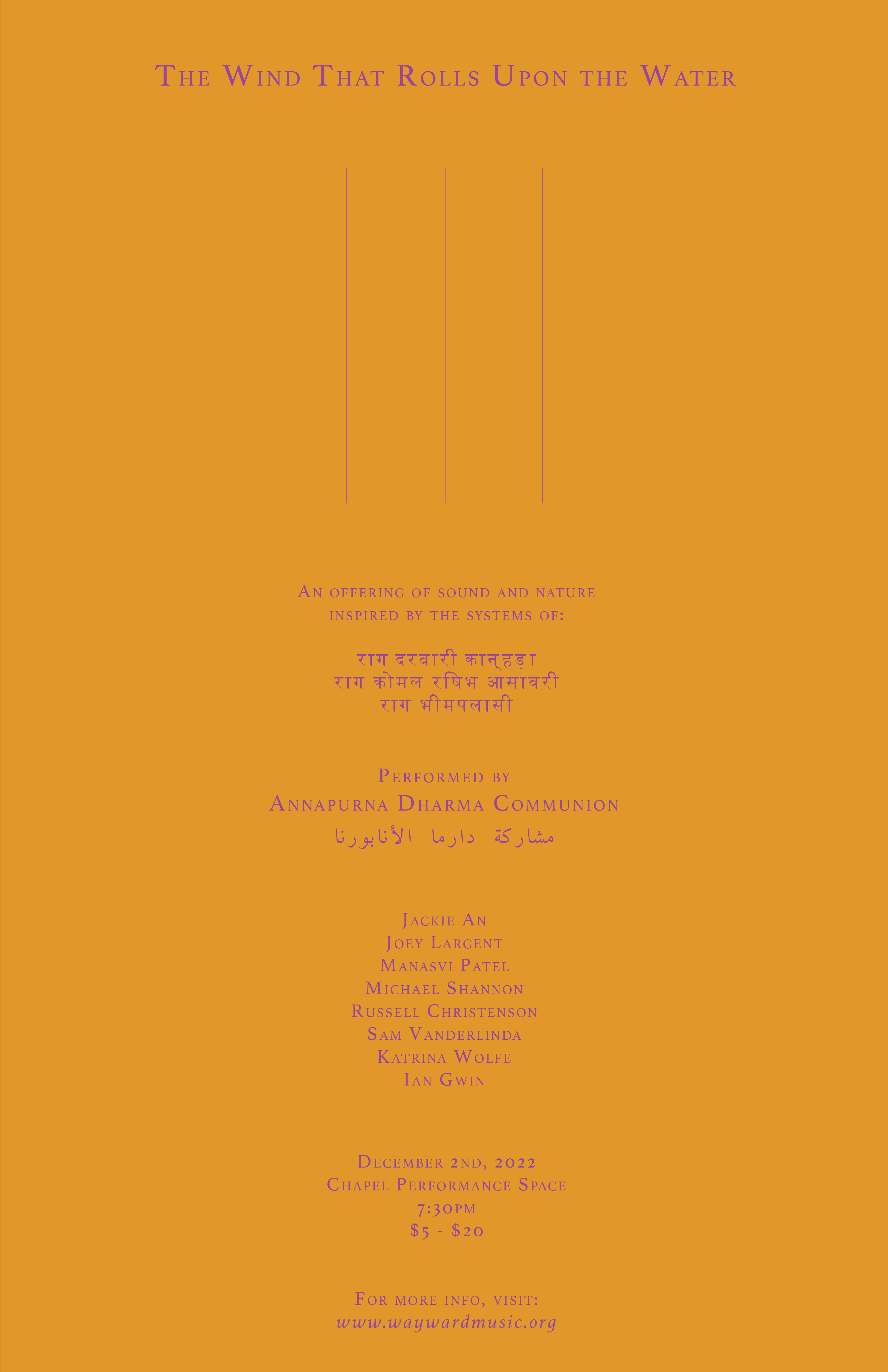
The Wind That Rolls Upon the Water
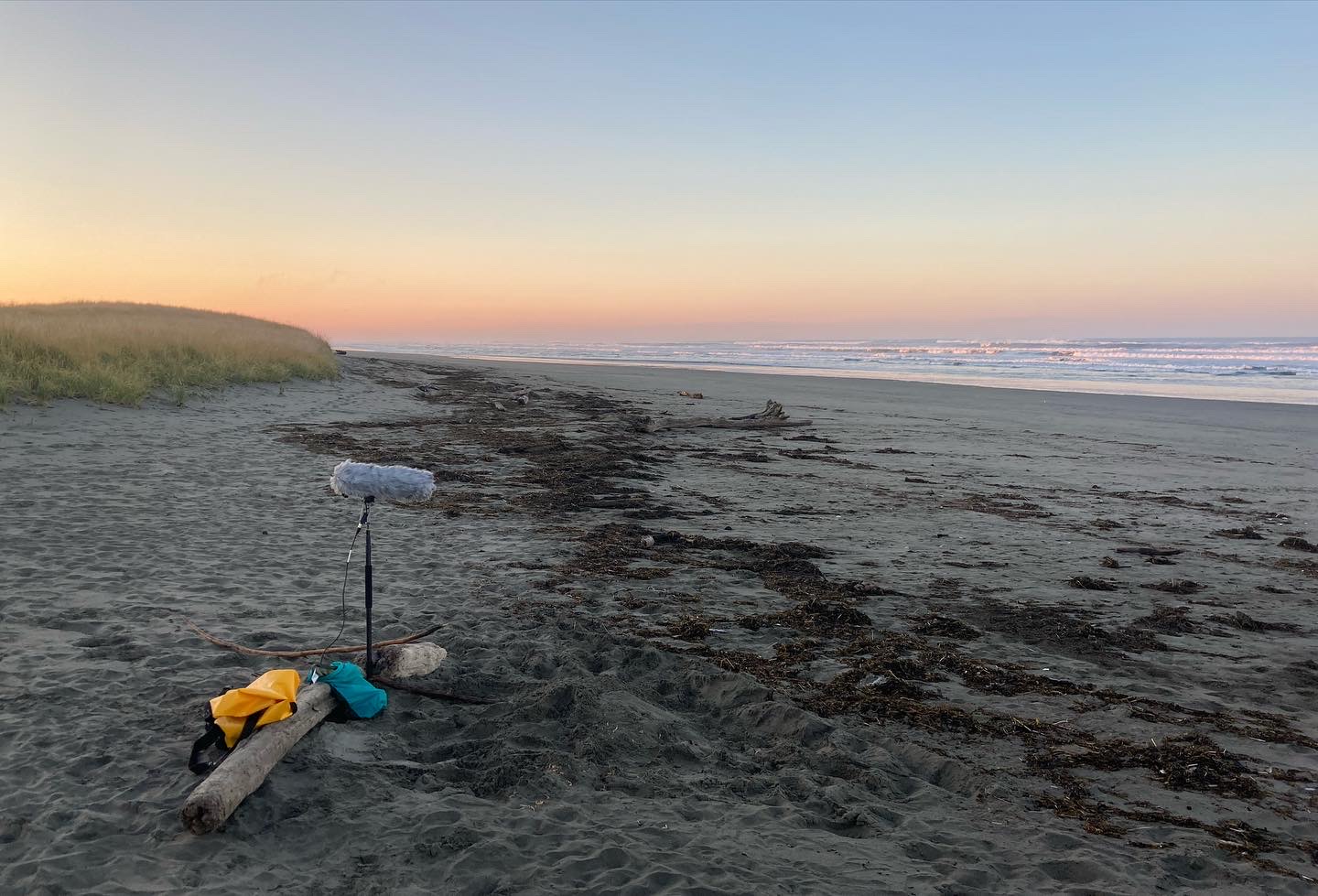
A 90-minute ensemble piece in 7-limit just intonation, built around direct observation of nature in the mountains, coasts, and caves of Washington State, paired with a field recording taken during a meditation at high-tide on Rialto Beach.
First Presentation:
December 2, 2022, Chapel Performance Space, Seattle, WA, USA
Credits:
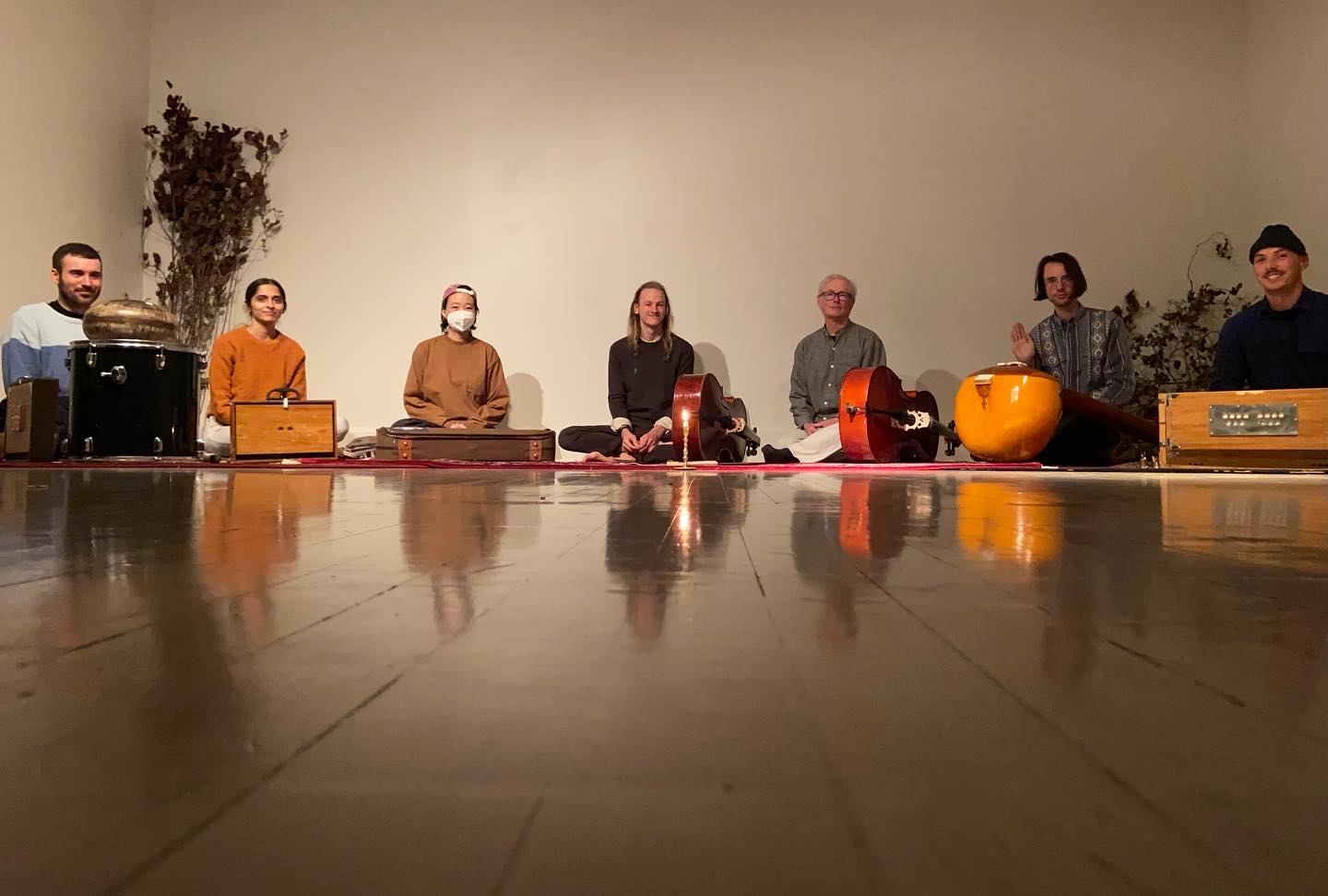
- Performed by Annapurna Dharma Communion
- Jackie An — violin
- Michael Shannon — cello, voice
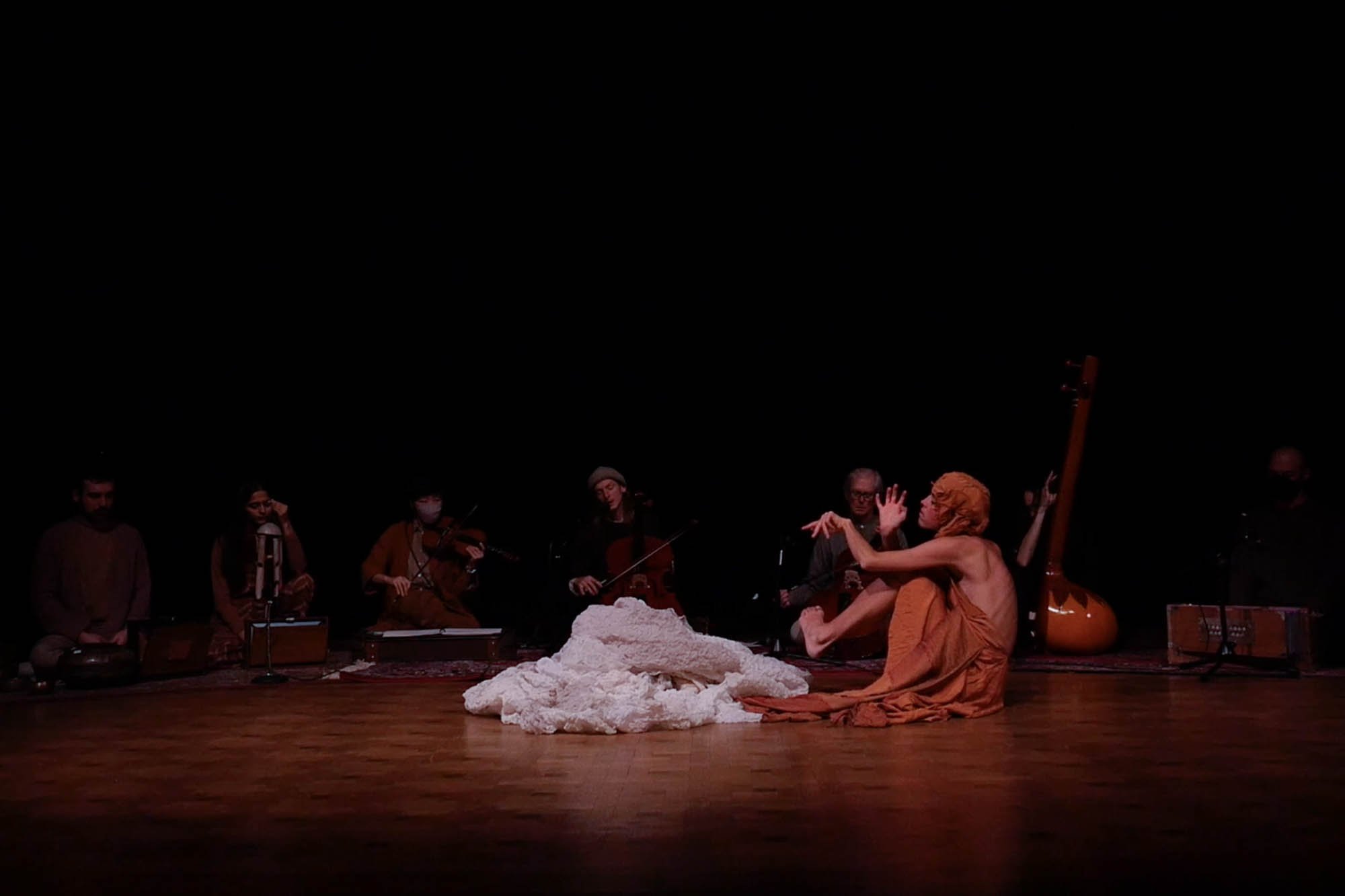
- Katrina Wolfe — movement, costumes, choreography
- Manasvi Patel — 7-limit shruti box, bamboo chimes, copper chimes, bells
- Sam Vanderlinda — 7-limit shruti box, steel tongue drum, bells, Tibetan bowls
- Russell Christenson — 7-limit harmonium, bells
- Ian Gwin — tambura
- Joey Largent — cello, voice, field recording, composition
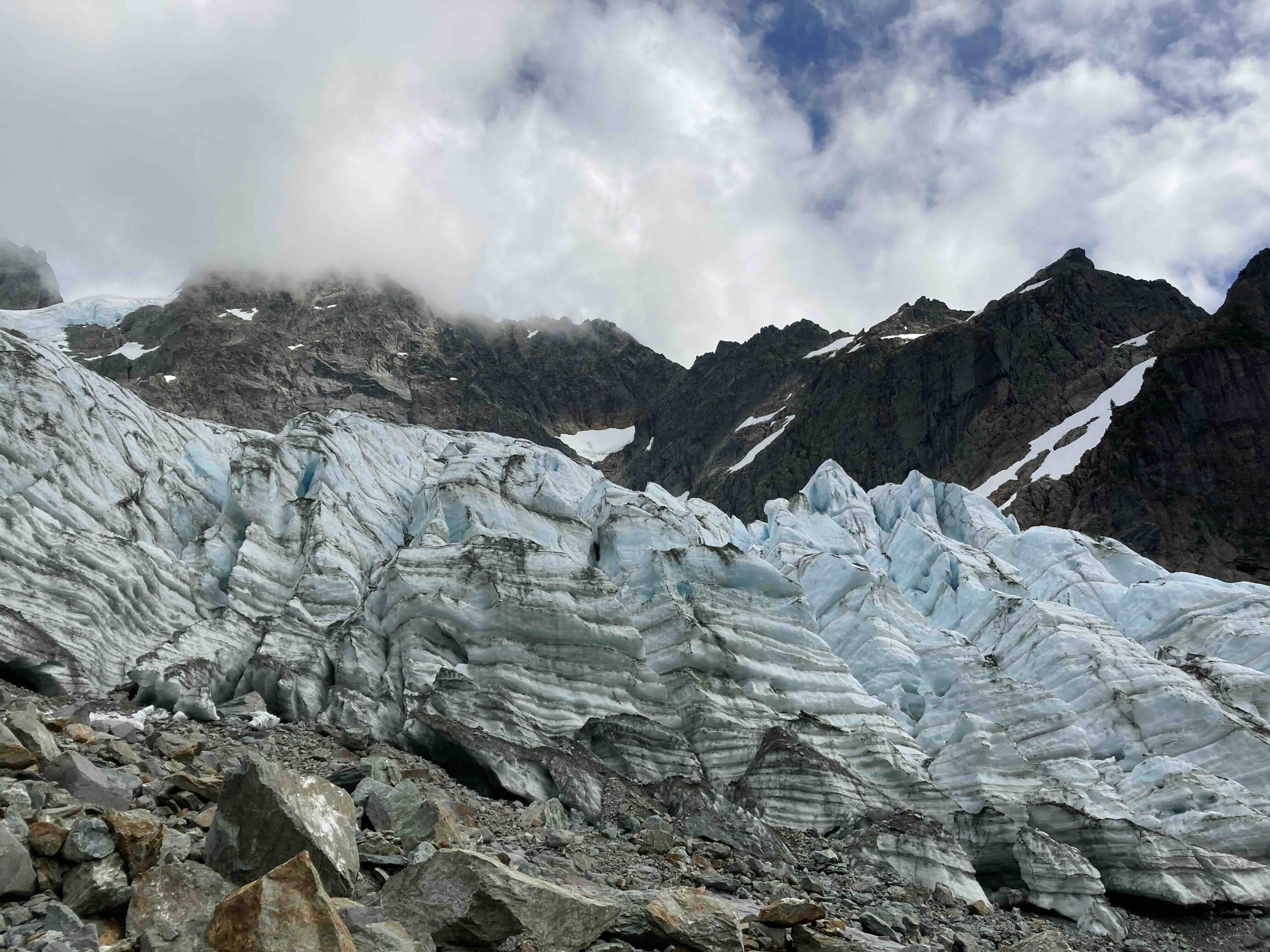
The Wind That Rolls Upon the Water is a long-duration work structured around direct observation of natural phenomena, translated into sound, movement, and collective presence. The piece unfolds across five sections - The Wind, The Clouds, The Glacier, The Cavern, and The Sea - each shaped by on-site observation and reflection rather than fixed musical narrative.
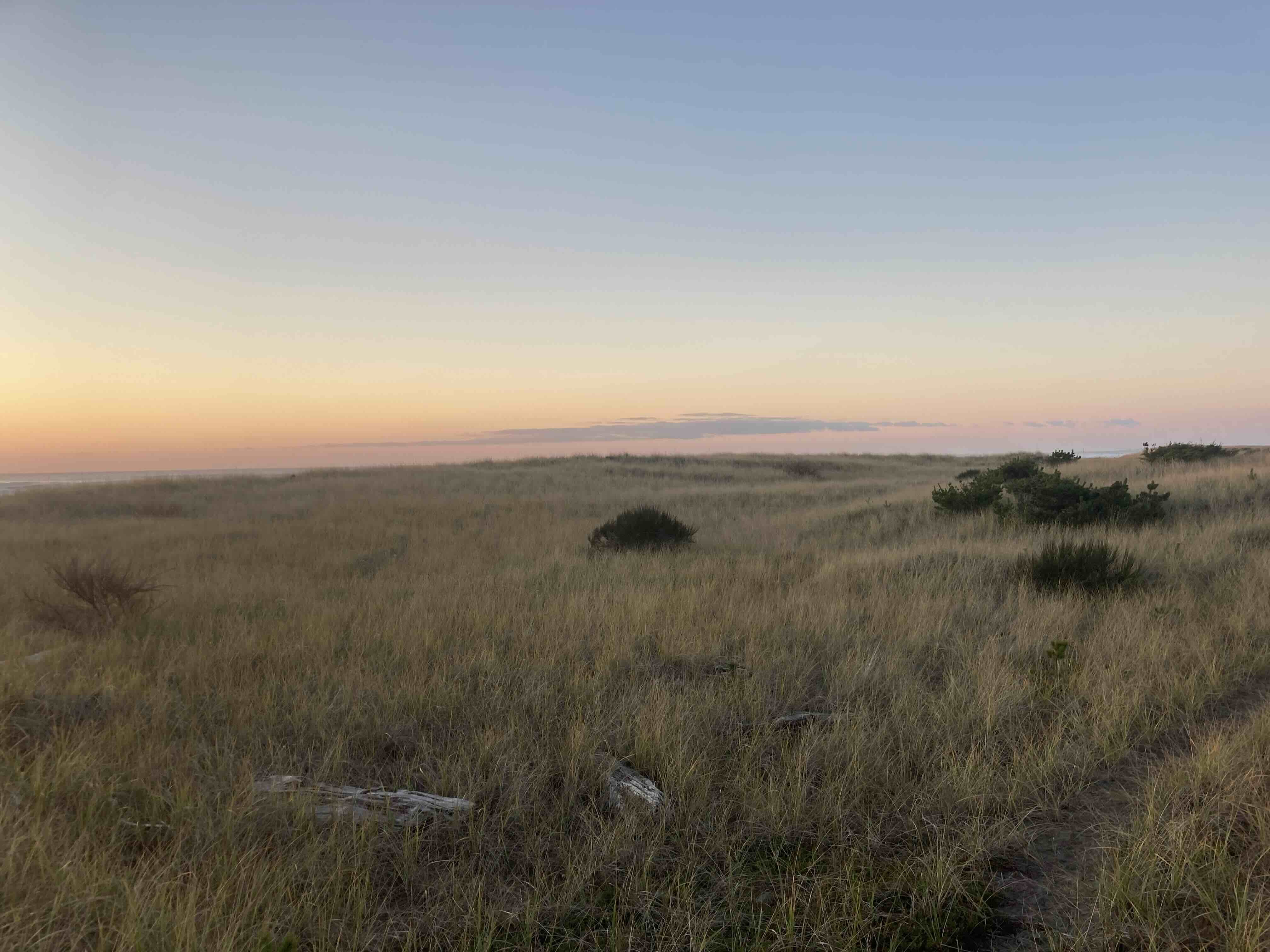
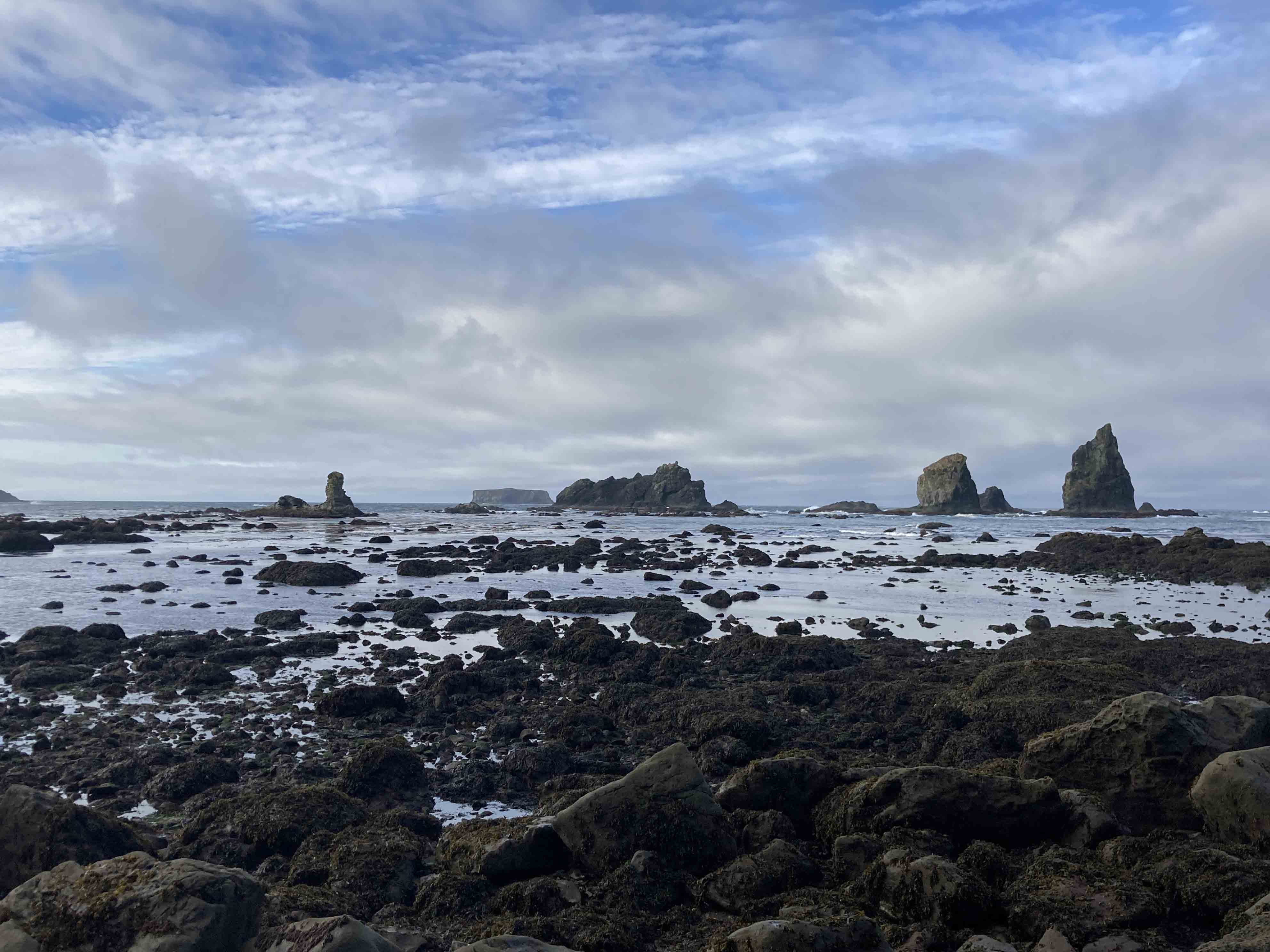
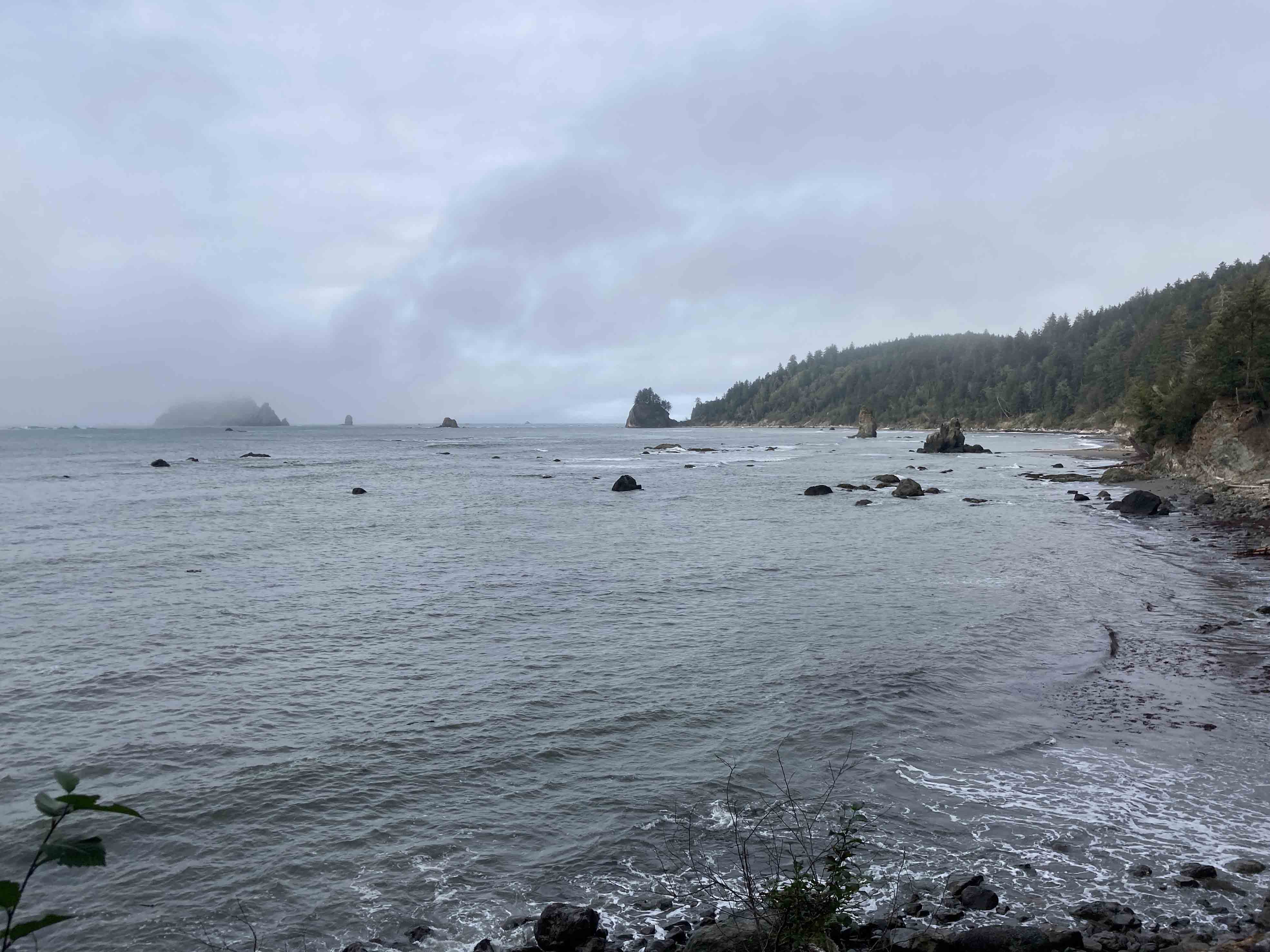
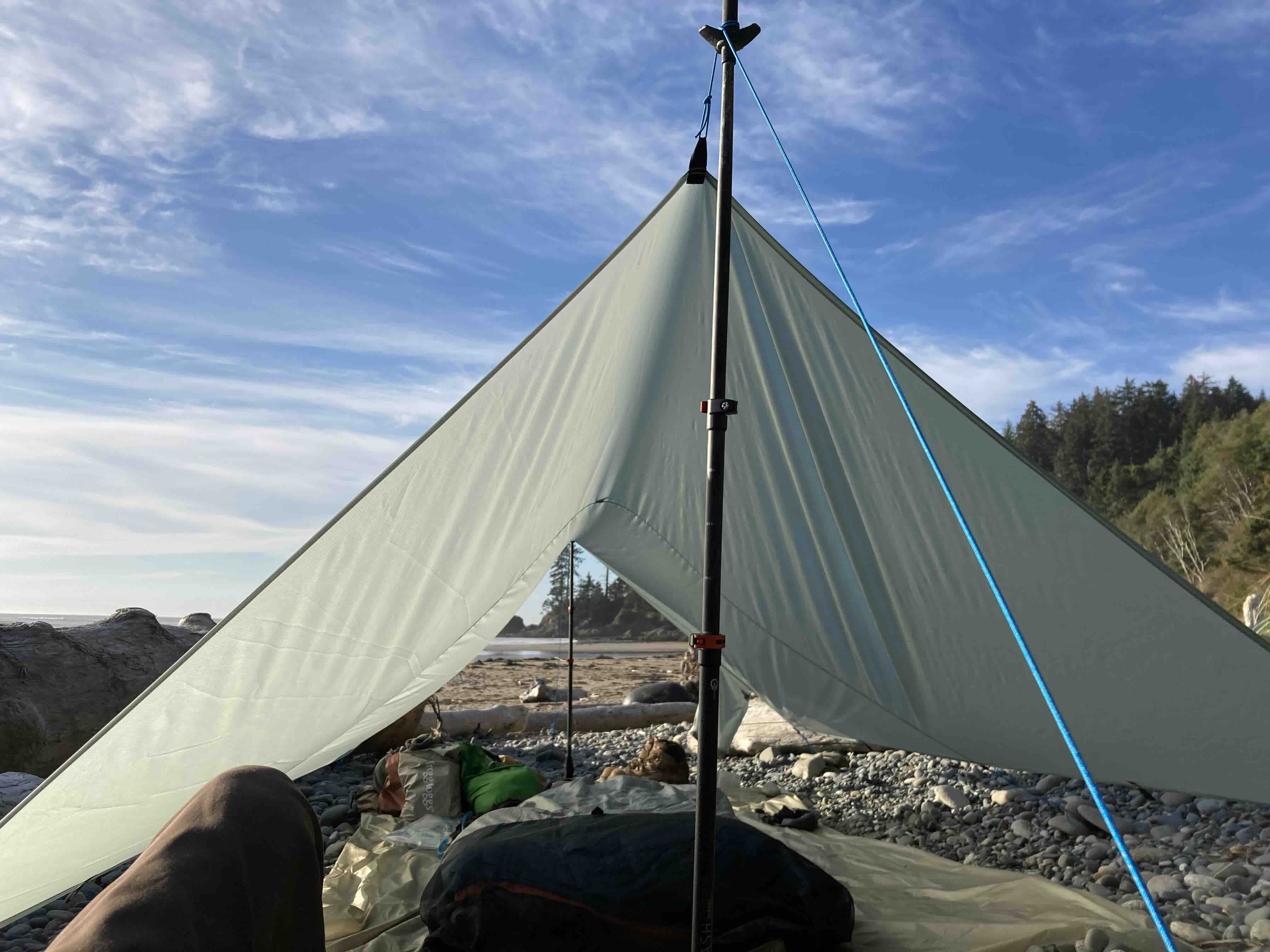
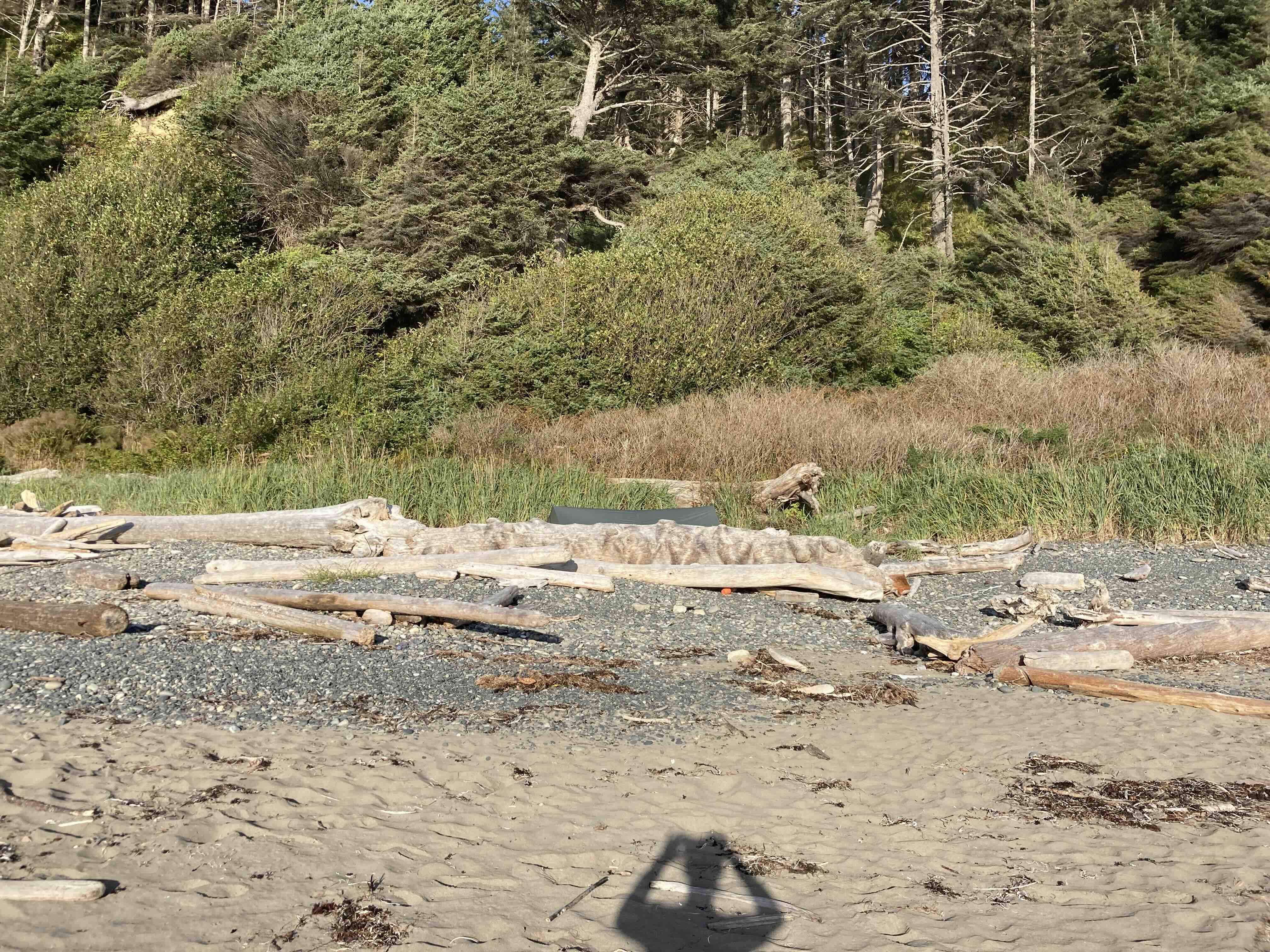
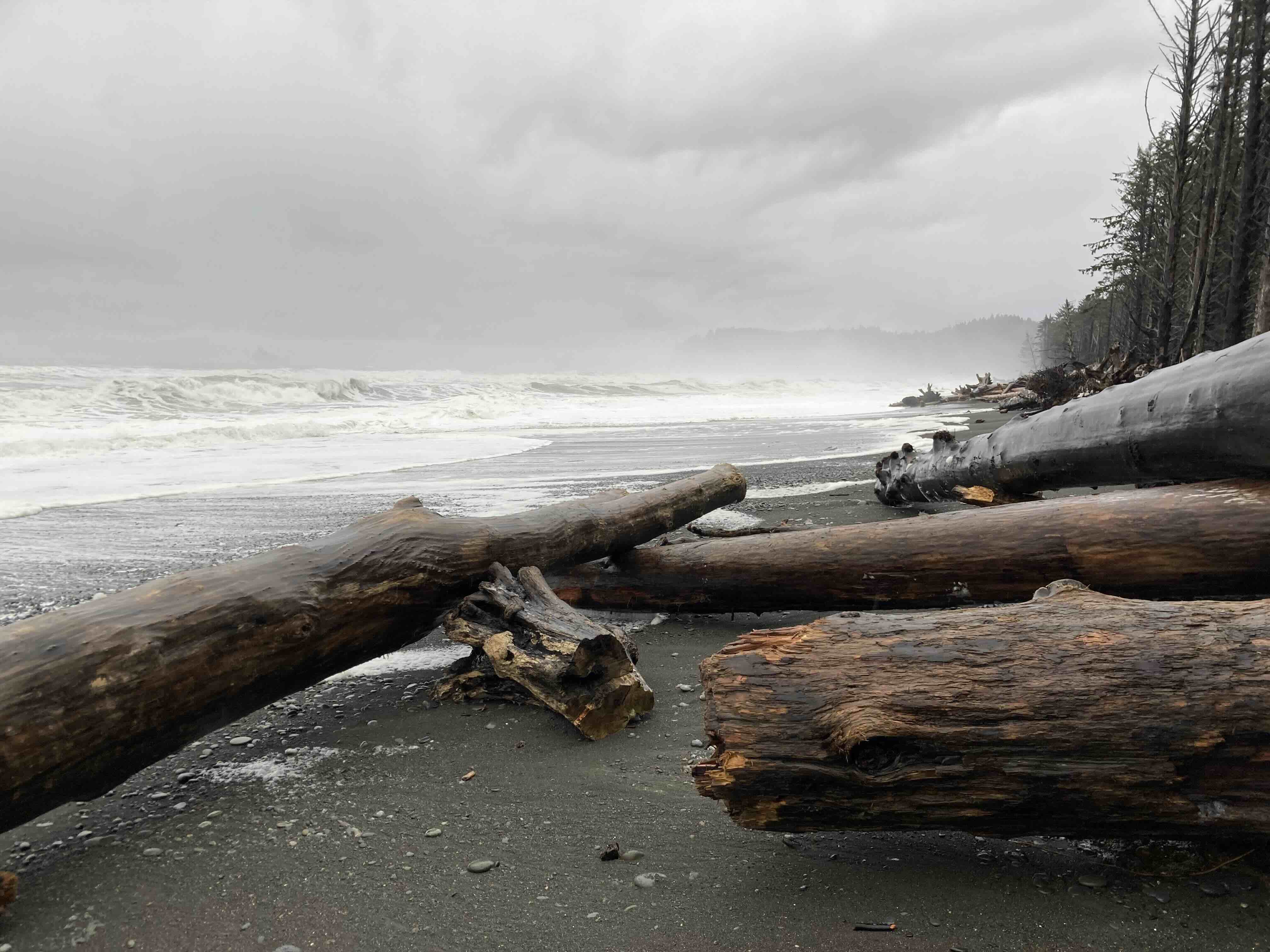
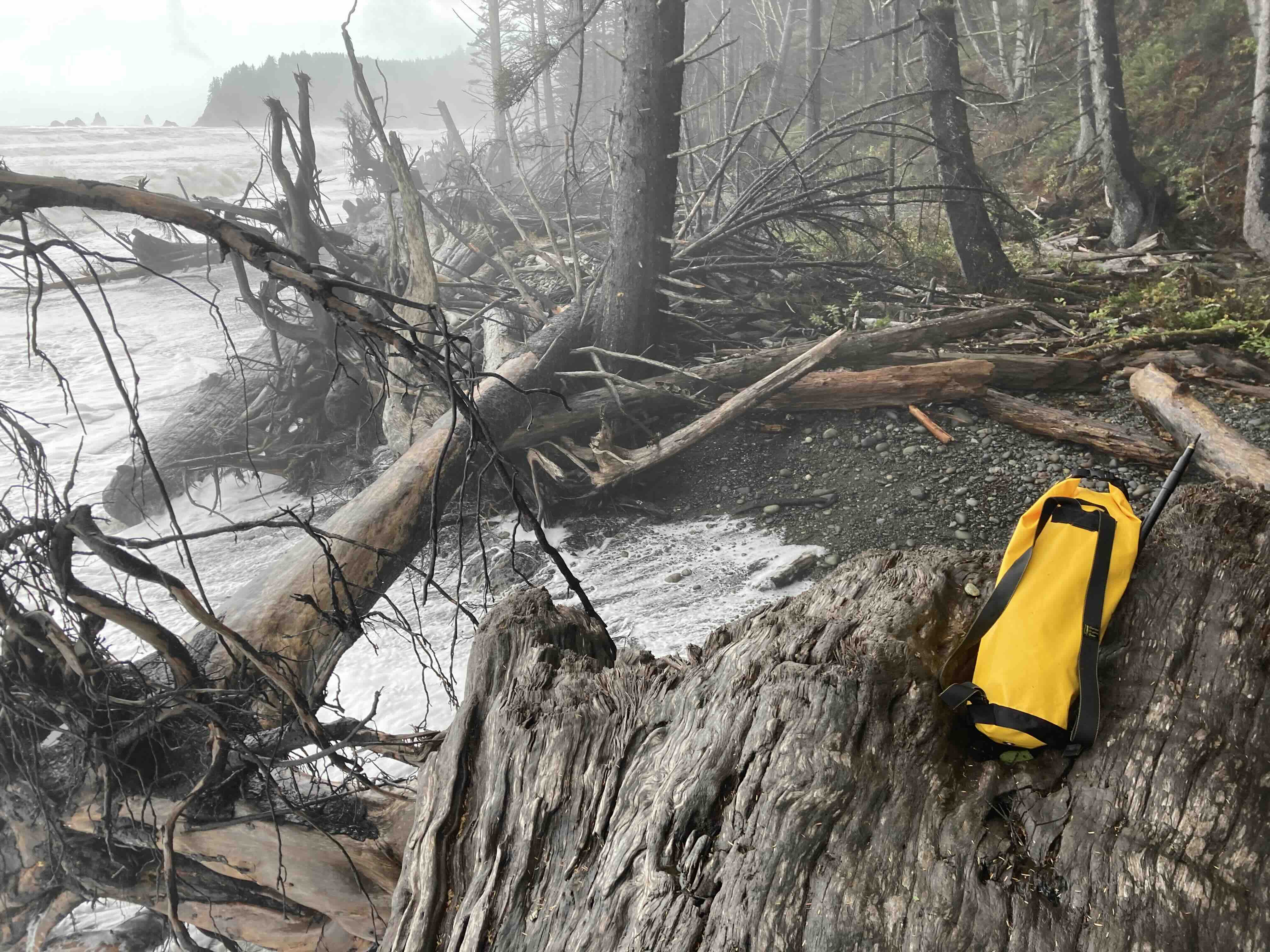
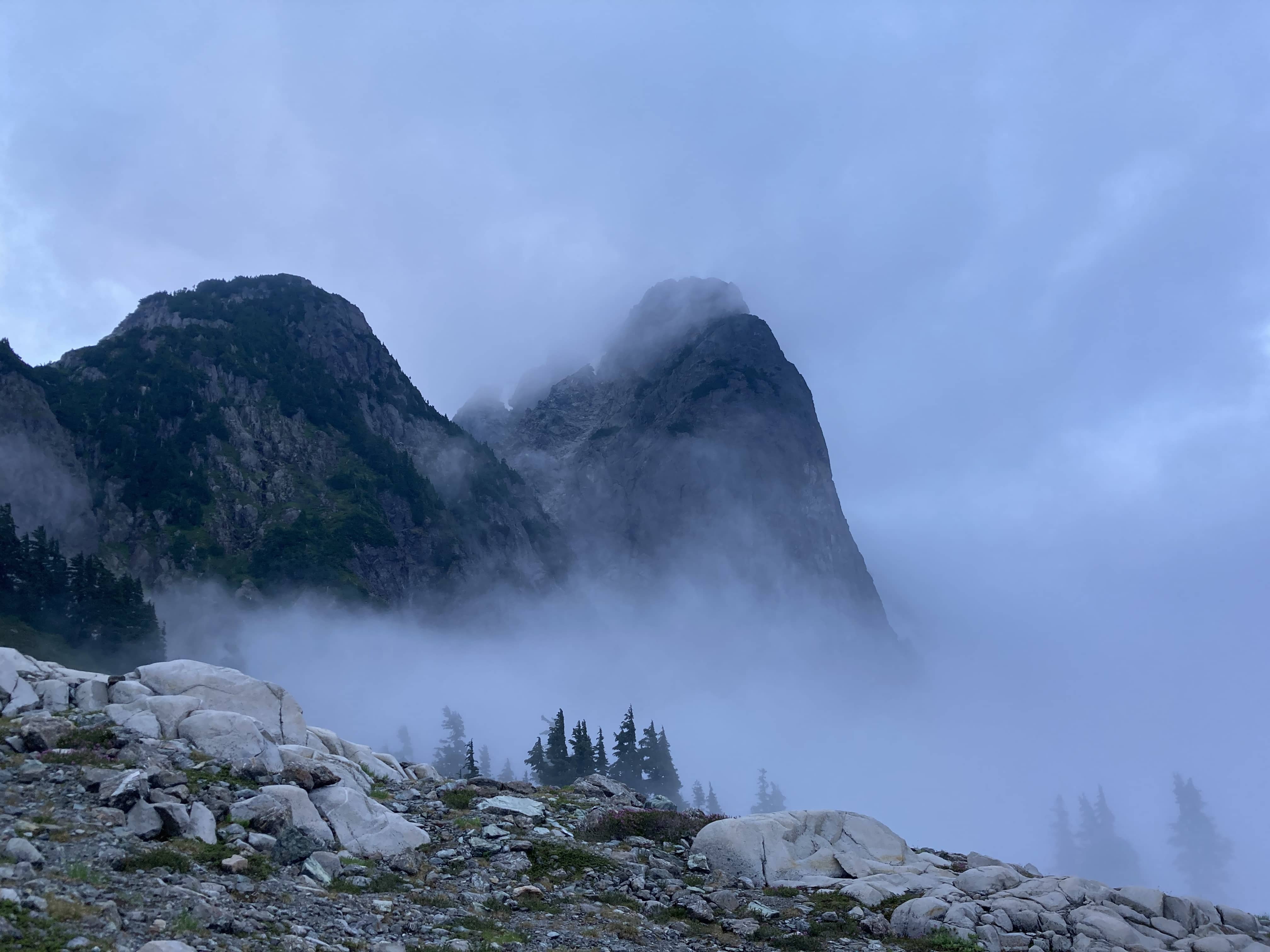
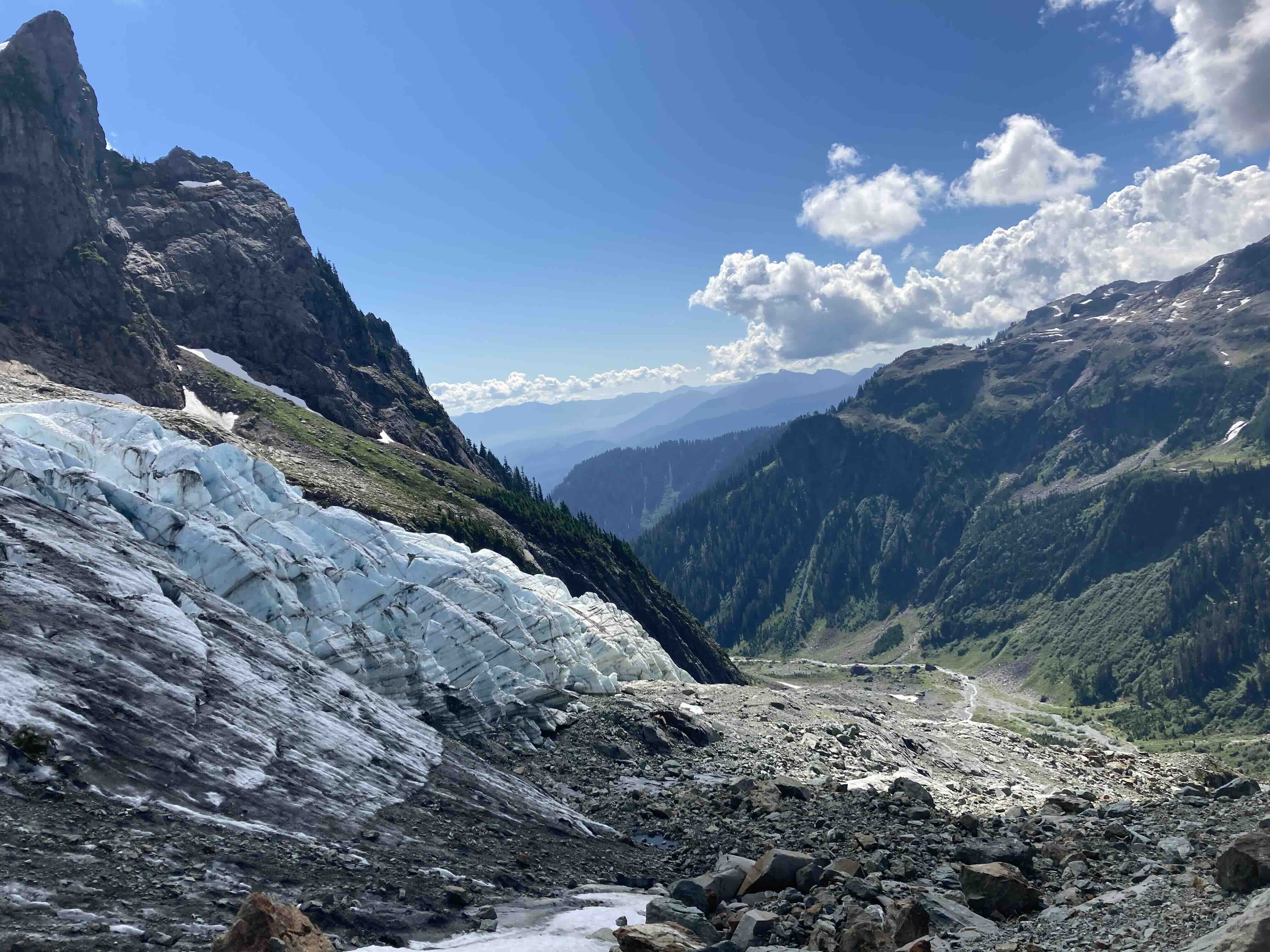
The work was composed on location at the base of Mount Shuksan near the Lower Curtis Glacier and along the North Olympic Coast. A two-hour field recording captured during a high-tide meditation on Rialto Beach forms a foundational layer of the piece, anchoring the ensemble within a slowly shifting natural environment. Rather than functioning as accompaniment, the field recording acts as a temporal and atmospheric reference, allowing the musicians to drift in and out of alignment with the landscape it evokes.
The music is set entirely in 7-limit just intonation, drawing from long-standing influences of North Indian classical music, particularly khyal of the Kirana Gharana, as well as the tuning systems and durational practices of La Monte Young and Michael Harrison. The score combines sparse harmonic frameworks with prose-based instructions, encouraging performers to explore sound through sensation and embodied attention rather than virtuosity or precision.
Movement and the costumes were integral to the structure of the work. Katrina Wolfe designed and hand-constructed a series of costumes corresponding to each section of the piece, allowing movement to function as a parallel, evolving response to the sound. Rather than illustrating the music, the choreography unfolded as a co-equal process, shaped by the same natural imagery and temporal openness.
The Wind That Rolls Upon the Water is the fourth work in an ongoing series that began in 2019, each iteration revisiting a shared instrumental foundation while allowing subtle structural shifts to emerge over time. Across the series, the focus has remained on duration, listening, and the possibility of shared stillness.
All photos by Joey Largent unless indicated otherwise.