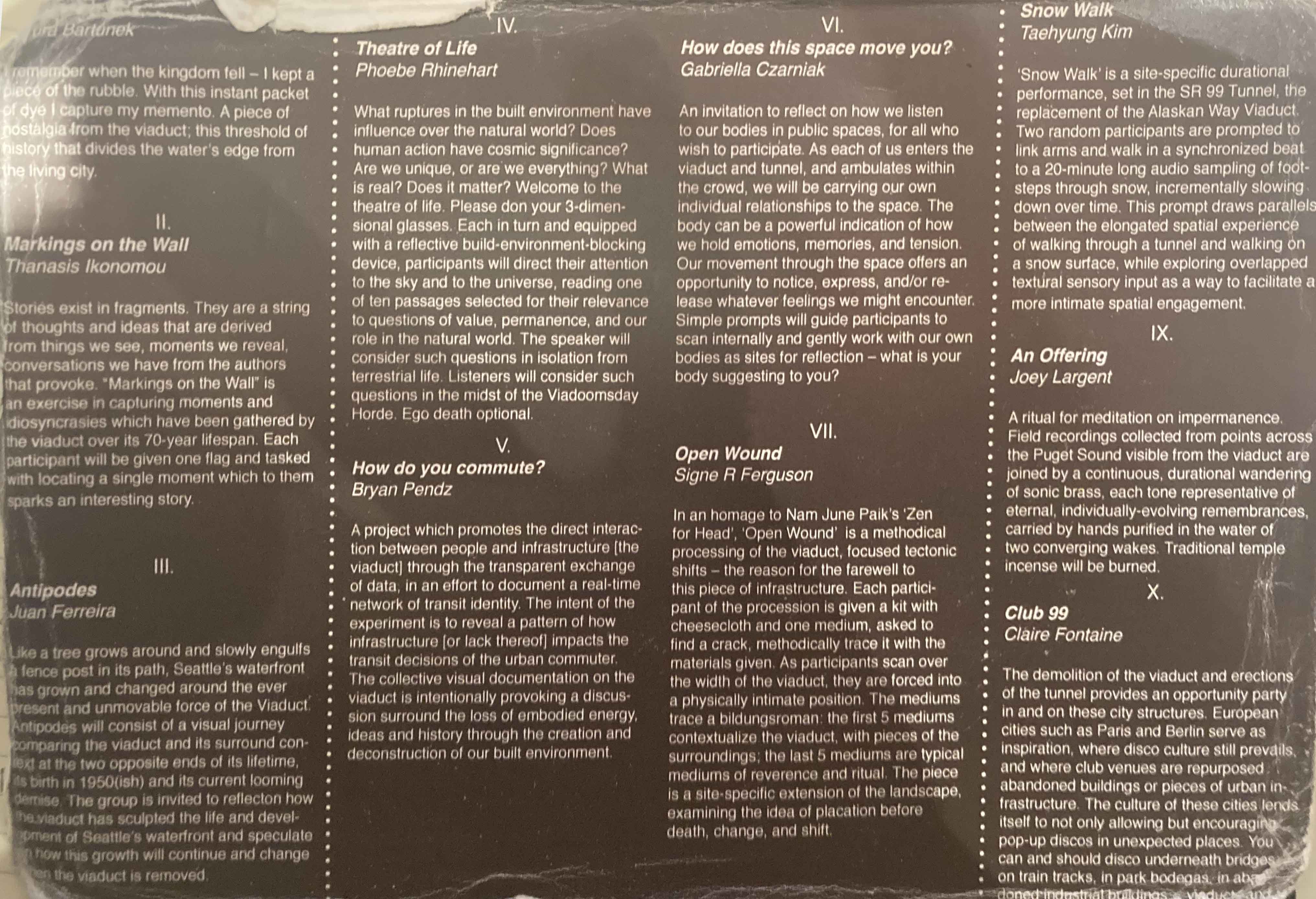
An Offering
A processional ritual for ten performers, made for the last public walk on Seattle's old viaduct before its demolition.
First Presentation:
February 2, 2019, Seattle Viaduct, Seattle, United States
Credits:
- Concept and composition by Joey Largent
- Participants: Tae Kim, Thanasis Ikonomou, Gabriella Czarniak, Phoebe Rhinehart, Mika (last name unknown), Gavin Argo, Joey Largent
- Part of 'Procession of Ten' by Signe Ferguson
On February 2nd, 2019, Signe Ferguson invited myself and nine other conceptually-minded artists and friends to create a series of programs — known as the Procession of Ten — involving the soon-to-be-demolished Seattle viaduct (a structure that presented a gorgeous driving view of the mountains and sound, but also posed earthquake hazards). Signe reserved several free tickets for us, as the roadway was to be opened up for walkers to process across one final time. Each of the ten participants was to develop a program that both involved each of the nine others and connected to the viaduct in some way.
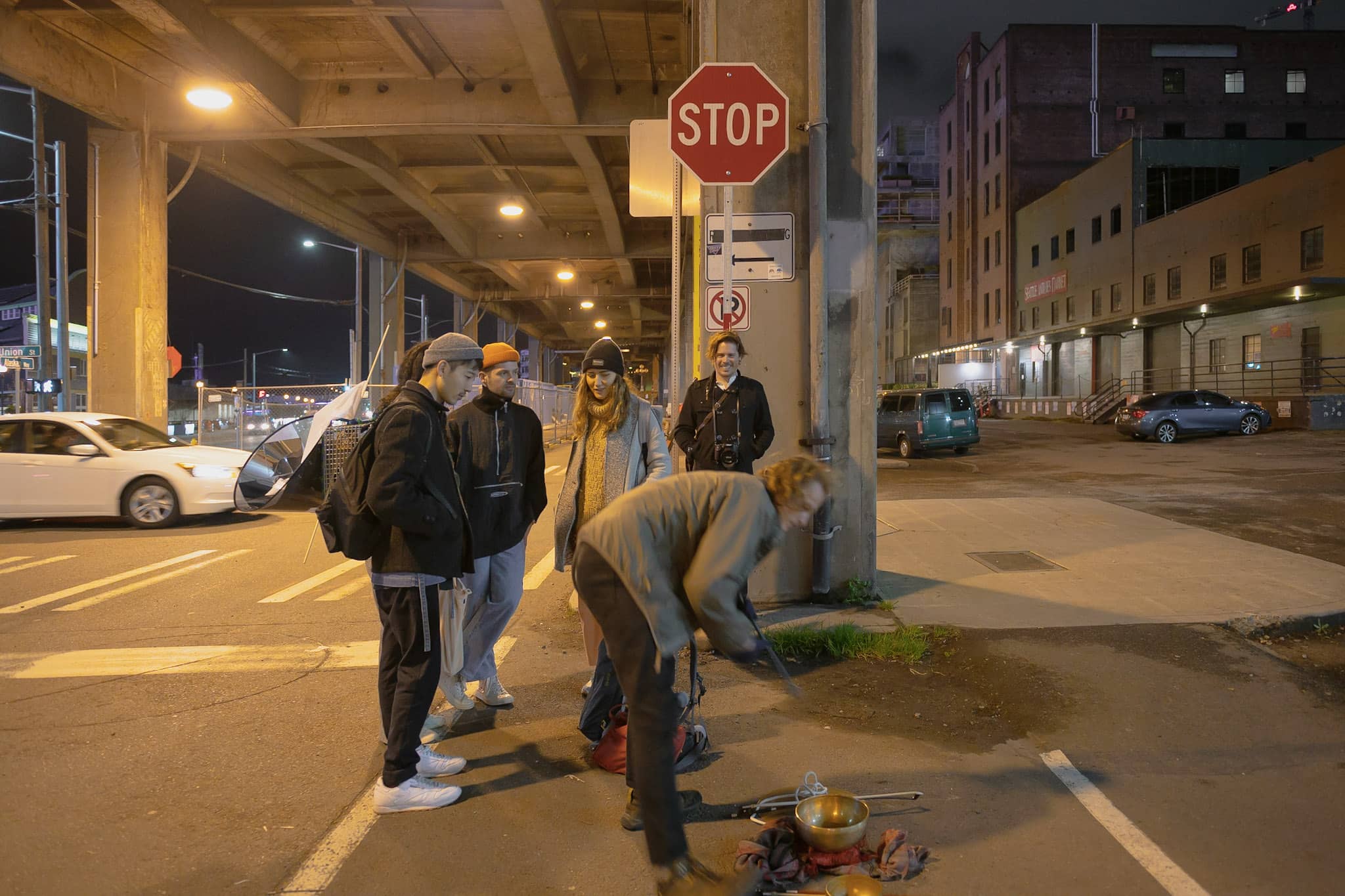
An Offering occurred at the very end of the long, eventful day of interacting with many humans and sharing our varying ideas and programs with each other. They had closed the viaduct and tunnel to walkers by the time we had gotten to the tenth person’s program (mine), and so we wandered away to a more intimate, public, less-theatrical place (underneath the viaduct), losing some of our original participants in the process, and gaining some new ones.
The project to develop An Offering was a multi-layered one featuring more elements of ritual than any practicality. The idea of creating an artwork to celebrate a giant concrete mass was not originally inspiring to me in many ways, but I was excited by the challenge to consider ways of making this meaningful somehow. I wanted to transcend the architecture somehow, show that there is a natural world of connection and communion amongst humans that is deeper than a concrete city.
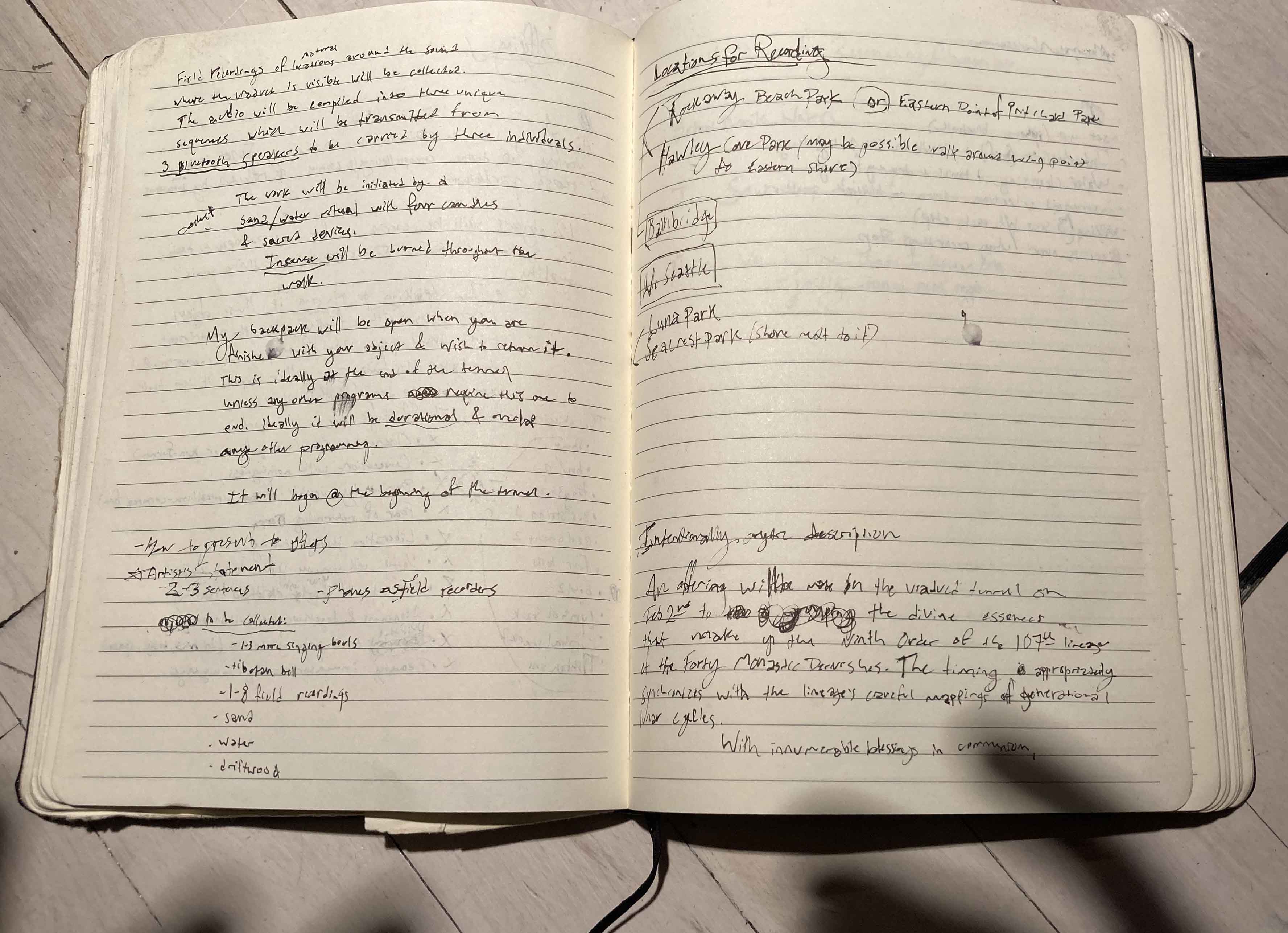
The first step in this project involved traveling to several sites across the Puget Sound that were visible from the viaduct — primarily West Seattle and Bainbridge (which Signe joined me for). Once there, I captured field recordings of the locations, all of which featured water in a significant form.
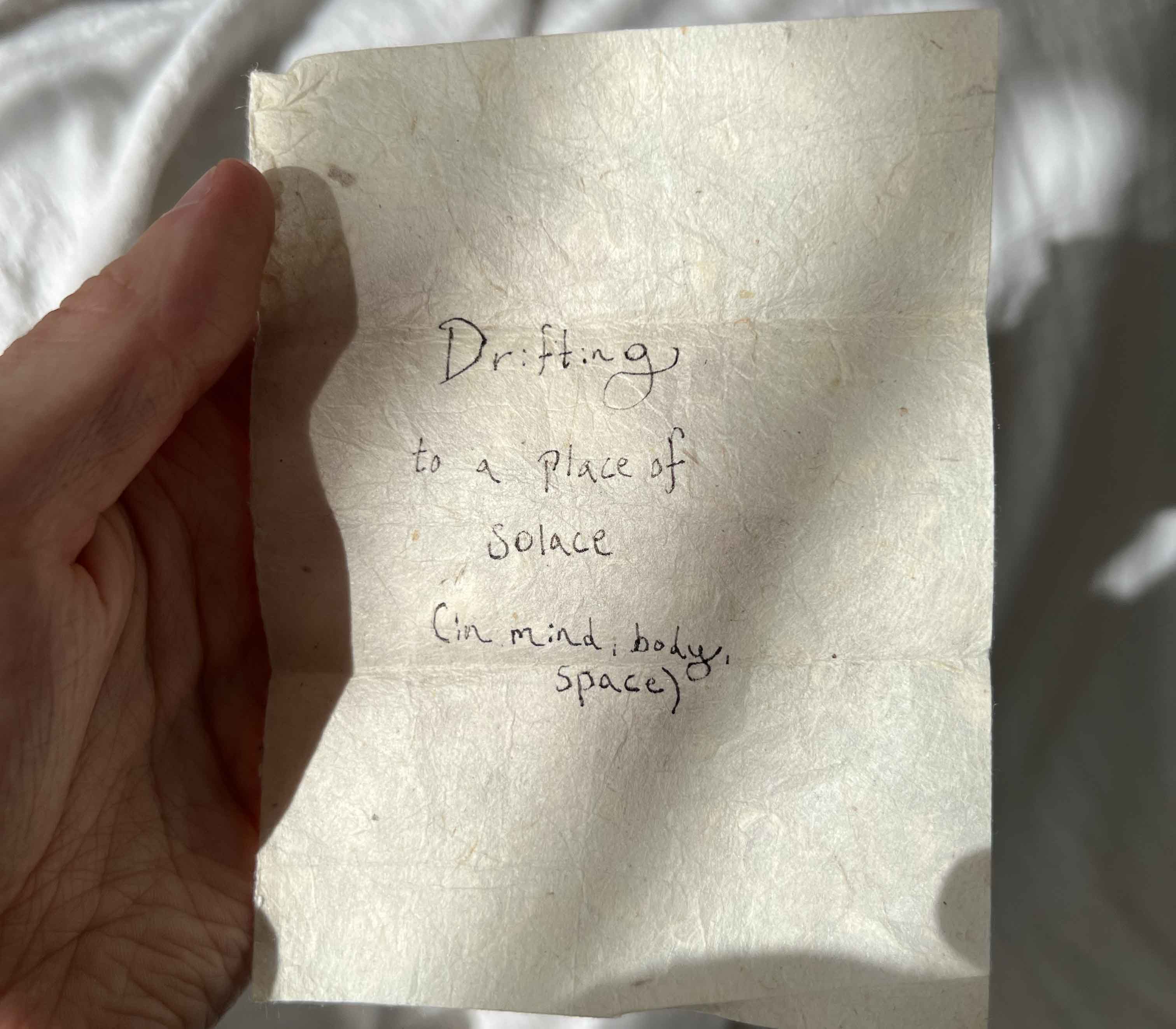
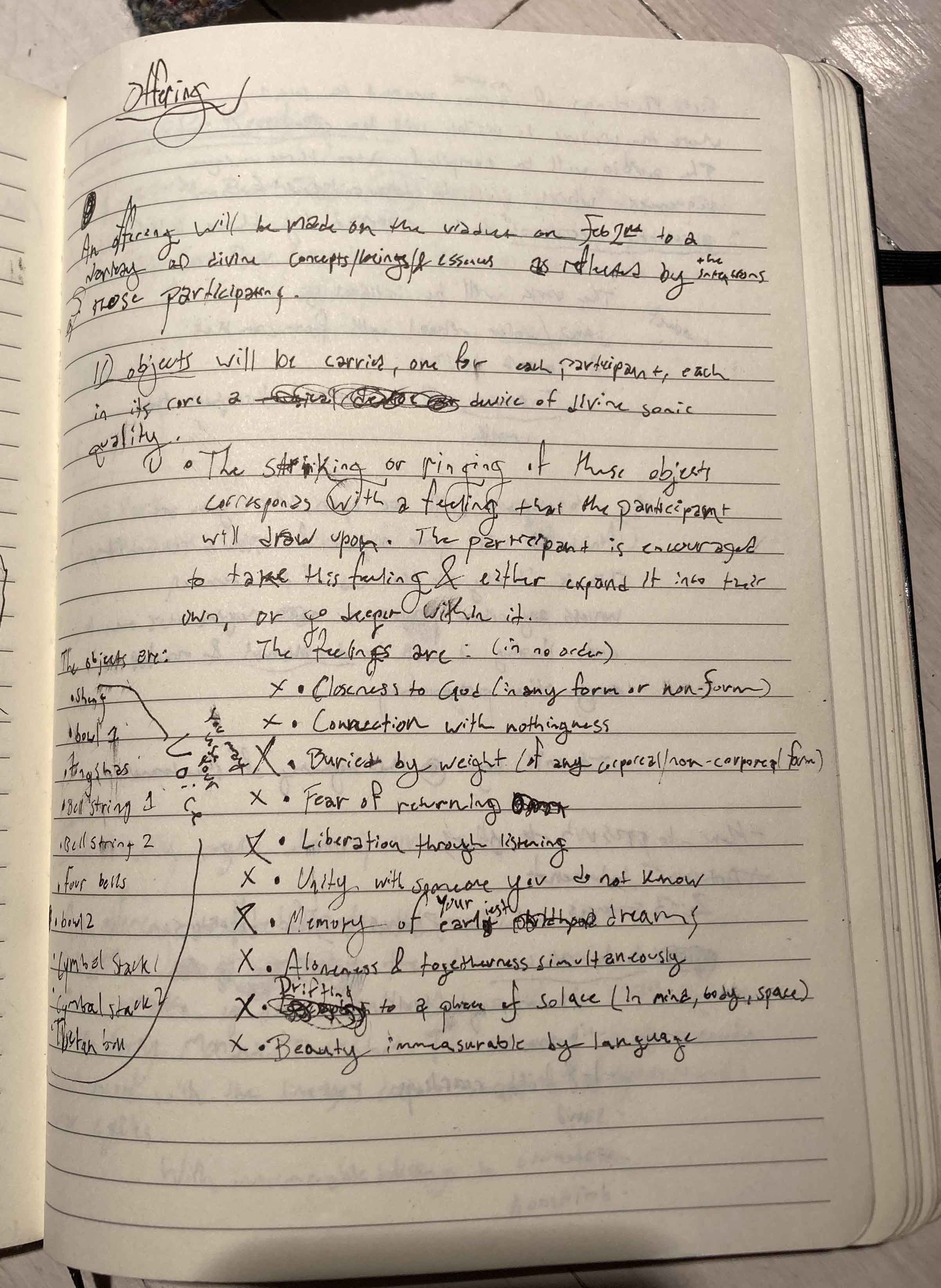
I then compiled these field recordings into layers on top of each other based on location, and assigned each location to a separate bluetooth speaker. At the performance of the piece, each participant was first to put out their hands to be washed by the water of two converging wakes (there is a cut on Bainbridge where this happens) that I had collected in a large mason jar, and then given a small scroll. Each scroll listed a particular feeling. When that feeling arose — as it inevitably did — the participant played their instrument for the duration of the thought.
Each person was also given a stick of traditional Japanese zen temple incense to burn. After receiving the scrolls and incense, participants selected their instruments from a variety of brass percussion instruments (bells, mallet cymbals, bowed cymbals, and signing bowls). They were then instructed to relax, focus on their breathing, the thought, and the coming and going of it, and to walk forward gently, counting roughly three seconds between each step.
Once we began, it was a beautiful experience — one that is difficult to put into words. I remember feeling surprise when hearing one participant constantly ringing a tiny bell, similar to the sound of Salvation Army donation collectors. When I asked afterward, he told me what was written on his scroll: “feeling connected to someone you do not know.” He was one of the people who joined our group at the very end, and none of us knew him beforehand. He said the feeling never stopped for him.
I did not document every participant’s name at the time, so what remains is a single photograph, notes from my journal, an audio recording, one scroll, and a partial list I reconstructed afterward.